

Horse Racing Data Basics
How to Read a Korean Race Card: 7 Things to Check First
A beginner-friendly guide to race conditions, horse numbers, carried weight, body weight and recent form on a Korean race card.
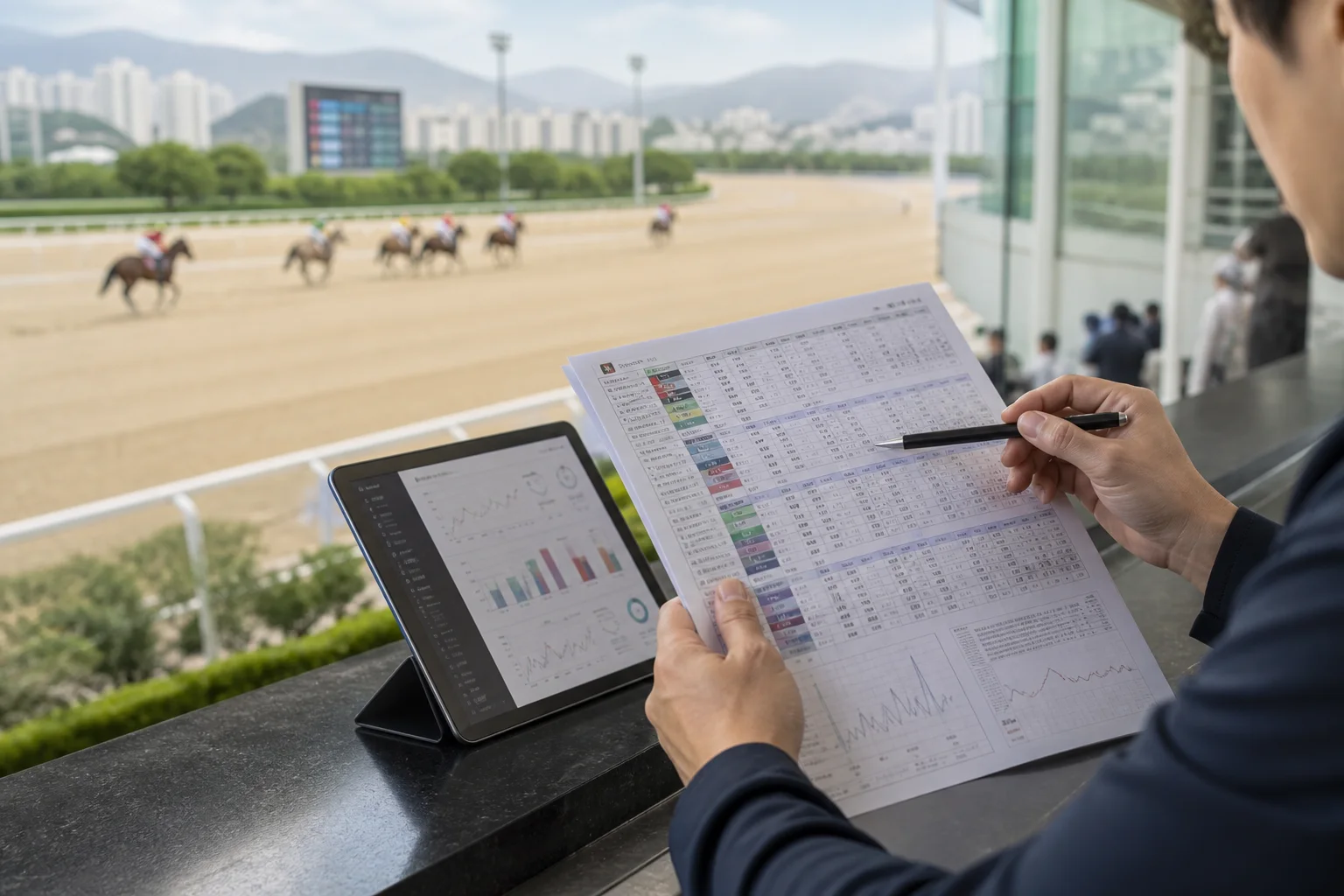
A Korean race card becomes easier to read when you follow one order: race conditions, horse details, carried weight, recent form, then race-day changes. Do not try to interpret every number at once. First decide which past performances are genuinely comparable.
1. Start with the race conditions
Check the venue, race number, distance, class and start time. A result over 1,200 metres should not be applied directly to an 1,800-metre race, and a fast time in a lower class does not automatically prove that a horse can repeat it against stronger rivals.
Labels such as 국6 and 혼4 combine origin restrictions with class. Entry rules can change by season, so use the current KRA racing plan for exact conditions.
2. Separate the horse number from the draw
The horse number identifies the runner and is connected to its starting gate. A low or high draw is not automatically good or bad. Distance to the first turn, the horse’s usual running style and its starting behaviour all matter.
3. Understand carried weight
Carried weight includes the jockey and relevant equipment. A lower figure is not always an advantage because class, rating, age and sex allowances, and apprentice claims can explain the difference. Compare the current weight with the horse’s own recent races, then check whether the distance and opposition are also similar.
4. Treat body weight as a trend
The race-day body-weight line shows the horse’s current weight and its change from the comparison race. Compare a horse with its own normal range rather than with a differently built rival. Our guide to racehorse body weight explains this in detail.
5. Filter recent form by similar conditions
KRA entry details include class, distance, finishing position, time, carried weight, body weight and rating. Review the most relevant races first:
- The same or a nearby distance
- The same venue and a similar track condition
- A comparable class and carried weight
- Any unusual start, traffic or steward’s note
Sectionals such as S1F and G3F help reconstruct early position and finishing movement. See what S1F and G3F mean before comparing them.
6. Read jockey and trainer data as a partnership
Overall strike rates provide context, but records with the specific horse and at the distance are often more relevant. Do not label a jockey change as positive or negative without checking previous partnerships and any change in carried weight.
7. Recheck race-day information
Jockeys, equipment, weights and declared runners can change after the first card is published. Check withdrawals, official changes, body weight and the latest track condition before the race. After rain, compare the official figure with our Korean track moisture guide.
One-minute checklist
- Are the past races at a comparable distance and class?
- How have carried weight and body weight changed?
- Which recent race most closely matches today’s conditions?
- Do sectionals or steward reports explain the result?
- Have you checked the latest declarations and track update?
A race card is not an answer sheet. It is a structured way to ask better questions. Avoid relying on one number and group performances under comparable conditions before reaching a view.
Informational content based on public data. It does not guarantee race outcomes or profit.